A Body-based and Relational Pathway into Facilitating Women's Circles with Integrity, Care and Presence
Women’s Circle Facilitator Training
Wound To Wisdom Project

-
![Deep green foliage representing the relational pillar of the Women's Circle Facilitator Training]()
Relational
A circle is alive with relationship. Between facilitator and participants, between the women in the room, and within everything we each bring with us: our histories, identities, differences, longings, wounds and ways of protecting ourselves. We learn to stay present inside that complexity, to notice power and group dynamics, to meet difference with curiosity, and to make room for honesty, boundaries, rupture and repair
-
![ark green tropical leaves representing the body-based pillar of the Women's Circle Facilitator Training]()
Body-based
Our bodies are where we live, feel, sense and meet the world around us. They carry their own language through breath, sensation, movement, tension, softness, pleasure, discomfort, reaching towards and pulling away. This bodily awareness becomes part of how we facilitate: how we notice what is happening in ourselves, stay responsive to the women around us, and create space for women to remain connected to their own bodies and choices.
-
![Lush tropical leaves representing the nourishing pillar of the Women's Circle Facilitator Training]()
Nourishing
Nourishment asks us a very important question: what helps us, as women, leave with more access to ourselves and to the resources we can find in one another? We explore pacing, capacity, pleasure, rest, co-regulation and integration, and how these can become part of the way a circle is held. We make room for depth alongside warmth, laughter, beauty and enough-ness, and for the mutual resourcing that becomes possible when women gather with care.



We bring ourselves into every circle we facilitate.
When we gather, we bring our whole lives into the space.
Our bodies and histories, our cultures and identities, our relationships and experiences, our ways of belonging and protecting ourselves, what we have learned to express, what we have learned to hide, and what becomes possible in the presence of other women.
As facilitators, we arrive with all of this too.
We bring our own histories, assumptions, sensitivities, boundaries, blind spots and ways of relating. We bring the ways we respond to conflict, closeness, silence, strong emotion, difference and uncertainty. All of this becomes part of the relational space we are creating together.
Facilitating women's circles asks for more than knowing how to structure a gathering or guide meaningful practices.
It asks us to know ourselves, to recognize the influence we carry in the facilitator role, to listen closely to what is happening in the room, and to develop the capacity to respond with discernment, care and humility.
This training is an invitation to develop those capacities while finding your own way of facilitating - one that feels rooted in who you are, responsive to the women in front of you, and able to grow as you do.

What You Will Develop
Facilitate women’s circles with greater awareness of what is happening in the room, in relationship and in your own body.
Develop a body-based, trauma-sensitive and relational approach that gives you structure to lean on without losing your responsiveness to the women actually in front of you.
Create spaces where women can speak, feel, move, question, rest and meet one another with greater honesty and care.
Learn to support expression and connection while respecting boundaries, difference, capacity and the many ways women participate.
Stay present when things become more complicated.
Develop relational skills for working with strong emotion, silence, tension, different needs, group dynamics, boundaries and the moments when connection becomes difficult.
Grow into a way of facilitating that is recognizably your own.
Strengthen your capacity to notice your impulses, assumptions and edges, make more conscious choices, receive feedback and remain connected to yourself while holding space for others.
You can join the interest list to receive occasional reflections and invitations, and be among the first to hear when applications open in January 2027, before they're shared publicly.
-
![Tropical foliage representing trauma-sensitive women’s circle facilitator training and nervous system aware practice.]()
Trauma Sensitive
We learn to pay attention to capacity, choice, pacing and nervous-system responses as part of facilitation. You’ll begin recognizing some of the ways activation, shutdown, overwhelm and disconnection can show up in a circle, while staying within the scope of a facilitator.
We explore how invitations are offered, how much choice people genuinely have, what happens when someone reaches their edge, and how our own nervous system can influence the space. This includes learning when to stay with something, when to slow down, when to offer support and when enough is enough.
-
![Green tropical leaves representing shame-informed practice in women’s circle facilitator training.]()
Shame Informed
Shame can change what becomes possible in a group very quickly. It can appear when someone feels exposed, misunderstood, corrected, different, too much, or suddenly unsure of how she is being seen by others.
We explore how shame can shape participation, silence, defensiveness, comparison and the urge to disappear or get things “right.” We also pay attention to our own responses as facilitators: how easily helping can become fixing, feedback can become correction, or our discomfort can create pressure for someone else to change. We practise meeting these moments with greater sensitivity, curiosity and care.
-
![Rain-covered tropical leaves representing inclusive women’s circle facilitation and relational practice.]()
Inclusive
We all arrive in our circles with different bodies, histories, identities, resources, abilities, cultures or experiences of the world. These differences shape how we participate, what feels accessible, how we communicate and what we need from a space.
We begin developing the awareness to facilitate across difference without expecting sameness. We look at accessibility, language, assumptions, power and participation, while staying curious about the biases and blind spots we inevitably bring with us. Inclusion becomes an ongoing practice of noticing who and what our spaces make room for - and what we may still be missing.
Core Training
A Grounded and Relational Foundation in Women’s Circle Facilitation

There is so much that happens when women sit in a circle together. Someone speaks and something shifts across the circle. One woman takes up space easily while another is still finding her voice. There can be laughter, discomfort, recognition, resistance, tenderness, silence, difference, connection.
Histories meet. Bodies respond.
Relationships begin forming.
As facilitators, we are part of all of it.
The Core Training is where we begin learning to work with this living, changing space.
Holding a circle asks for more than knowing what practice comes next or how to create a beautiful space.
Our capacity to listen and stay present, our relationship with uncertainty, emotion and silence, our boundaries, our assumptions, our desire to help, the places where we reach for control, and the ways we respond when something happens that we did not expect.
The Core Training brings these layers of facilitation into relationship with one another.
We work with the body and nervous system, boundaries, voice, group dynamics, emotional capacity, ritual and the structure and rhythm of a circle from the inside out.
Our own bodies remain part of the conversation: noticing what we sense, what we miss, what pulls us forward or makes us step back, where we tighten or soften, and what our nervous system may be communicating before we have words for it.
We cultivate the capacity to remain connected to ourselves while staying in relationship with the women around us.
This means learning to listen to our own signals and innate wisdom without assuming that every response we have tells us what is true for somebody else. It asks for self-trust alongside curiosity, discernment and the willingness to question ourselves.
This is a place to practice. To facilitate and participate.
To experiment with movement, ritual, creativity, silence and different ways of bringing women together. To receive feedback, question what we thought we knew, discover what feels true in our own bodies, and develop the discernment to make choices that are responsive to the women who are actually with us.
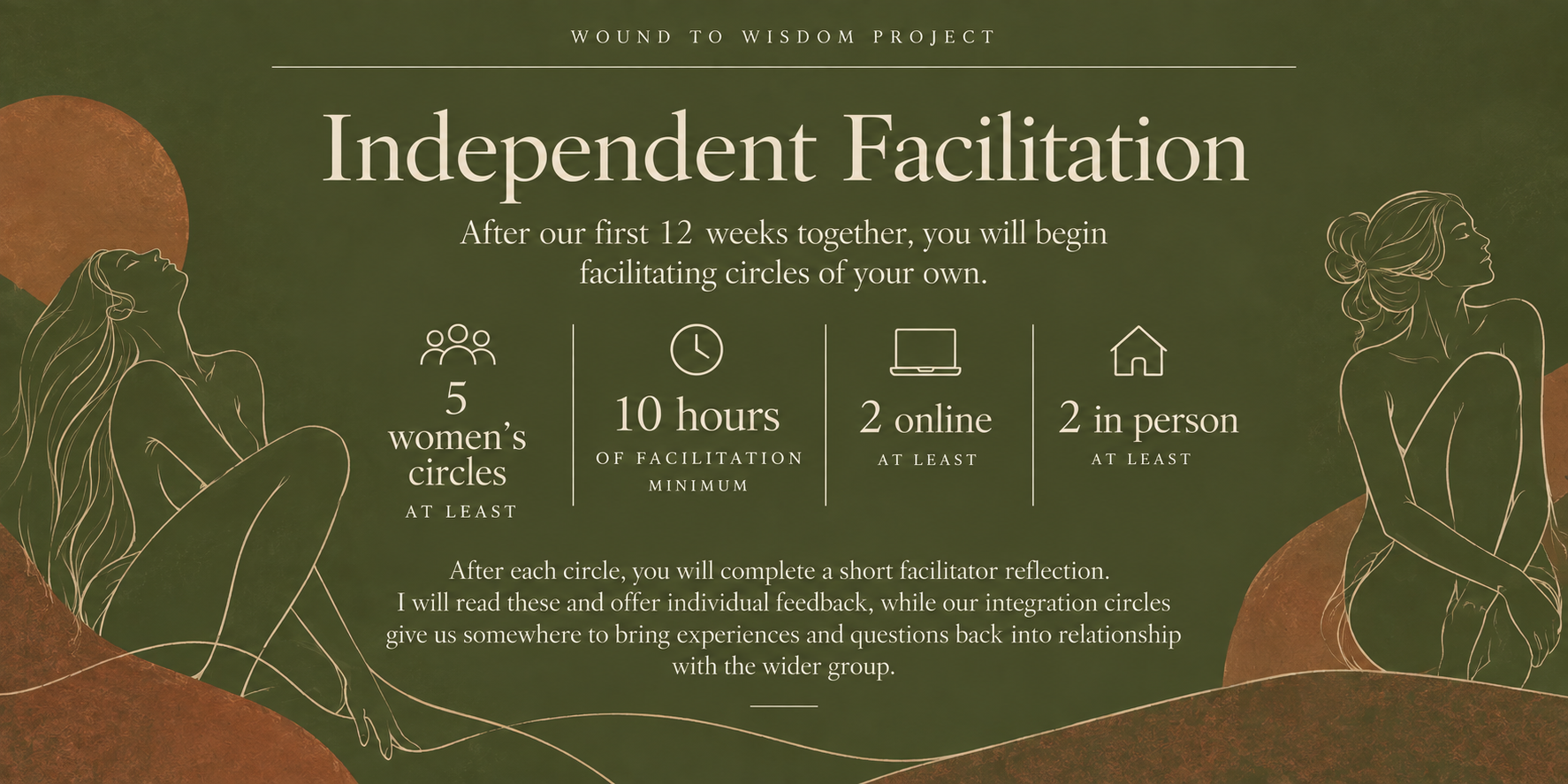
Over six months, the work moves from our shared training space into circles of your own and back again. Experience becomes part of what we learn from.
The aim is not to '“produce facilitators” who all sound, move or lead in the same way.
It is to build enough awareness, capacity and relational skill for your own way of facilitating to emerge.
What We’ll Explore Together
01. Opening Circle
We begin together by creating the foundations of our shared space and experiencing the opening of a circle from the inside. We explore intention, agreements, choice and nervous-system awareness, while making room for each woman to find her place and her voice without pressure to perform, disclose or arrive in any particular way.
02. Foundations of Holding Space
Holding space can easily become tangled with helping, fixing, carrying, or feeling responsible for another person’s experience. As women, many of us have learned these ways from childhood.
Here we explore a different relationship with facilitation: rooted in presence, reciprocity and the capacity to remain with what is actually happening. We begin noticing what belongs to us, what belongs to someone else, and what is emerging between us. allowing the circle to become something we are in relationship with rather than something we have to control.
03. Nervous System & Safety
A group has its own rhythms. Energy rises and falls. Someone’s activation can ripple through the room. Silence can feel nourishing to one woman and uncomfortable to another. What feels spacious today may feel like too much tomorrow.
We explore safety as something living and responsive, shaped by nervous systems, relationships, choice and capacity. As we become more familiar with activation, settling and co-regulation, we also learn to recognize our own signals and edges, so that our facilitation can respond to what is present rather than pushing the group towards where we think it should go.
04. Embodied Presence
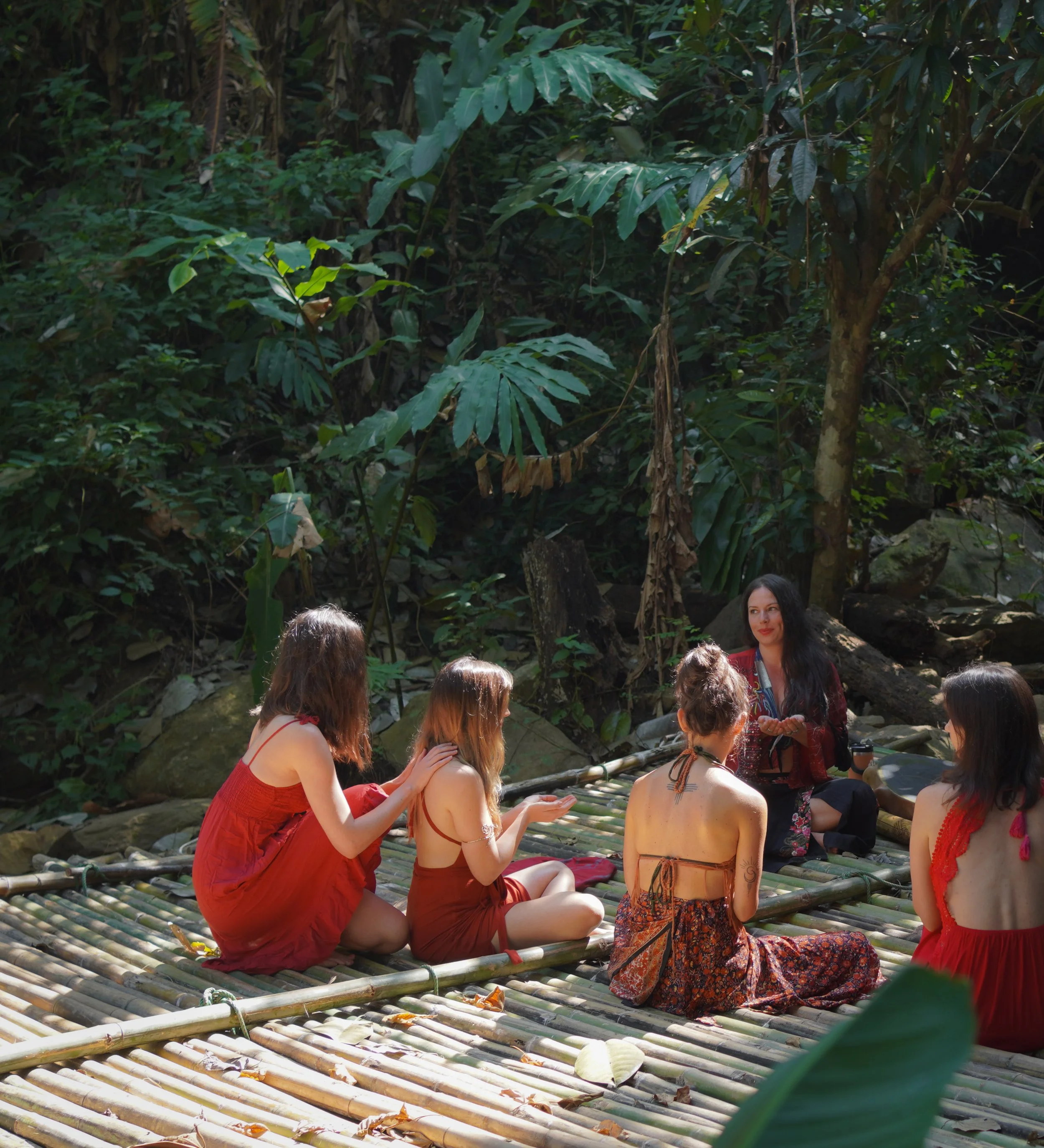
The body gives us information. A tightening, an impulse to move closer, a loss of sensation, a fuller breath, a feeling that something in the room has shifted.
Here we deepen our ability to stay in relationship with those signals while remaining connected to the women around us. Through somatic movement and sensory exploration, including gentle attention to pelvic awareness, we cultivate a way of facilitating that is less dependent on having the right answer and more able to listen, sense and respond.
05. Boundaries & Relational Safety
As women, we are often asked to make ourselves available: to care, accommodate, soften the impact of a no, and remain connected even when something is beyond our capacity. These patterns do not disappear when we become facilitators.
We explore the places where care can become over-responsibility, where our need to belong can make it harder to acknowledge our own limits, and what happens in us when someone is disappointed, pulls away, asks for more, or responds in a way we didn't expect. Through the body, we become more familiar with our yes, our no and our enough, allowing boundaries to support relationship, trust and a more sustainable way of holding space.
06. Voice & Expression
Our voices carry histories. Some of us learned to become smaller, agreeable or careful. Others learned to fill silence, explain, reassure or know the answer. Taking the facilitator’s seat can bring these patterns close to the surface.
We explore what it means to speak with clarity while leaving room for other voices to exist beside our own. Through speaking, listening and silence, we make space for a facilitator voice that can guide without dominating, invite without pressure, and grow from a deeper relationship with our own expression.
07. Circle Structure & Flow
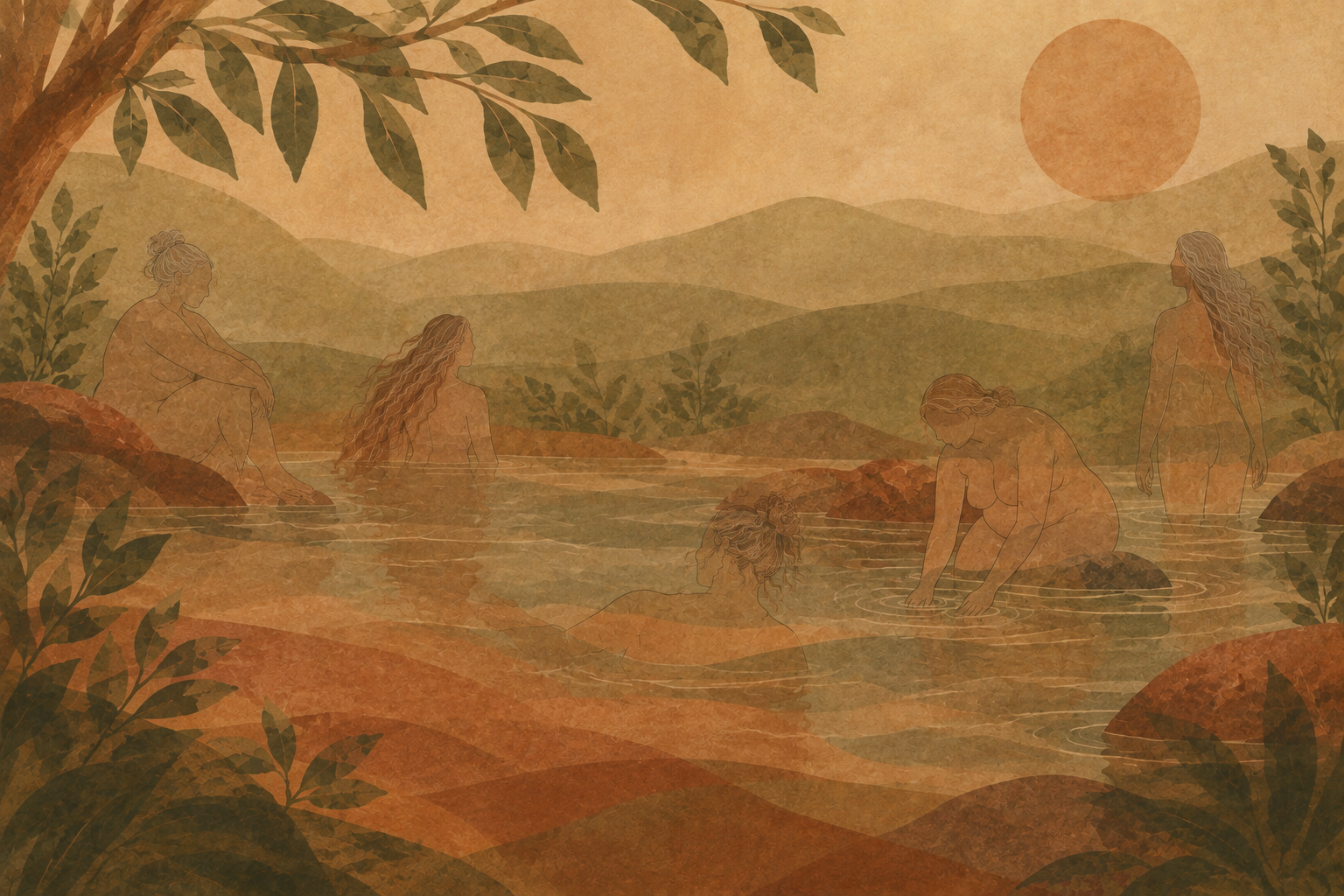
A circle needs enough structure to hold us and enough space to breathe.
We explore the living arc of a gathering: how women arrive, how connection develops, how energy changes, when something wants more time, and when the group needs movement, rest or closure. Structure becomes a support rather than a script, giving us a grounded framework while leaving room for the unexpected, the organic and the particular group of women who are actually with us.
08. Group Dynamics
Every group develops its own relational landscape. Some voices become more visible while others recede. Affinities form. Comparison, difference, power, tension, projection and experiences of exclusion can shape what happens between us, including what feels possible to say and what remains unspoken.
As facilitators, we are inside these dynamics too. We may feel drawn towards someone, protective, irritated, uncertain, left out, pulled into an alliance, or tempted to restore harmony too quickly. Group dynamics ask us to notice what is happening between people and what is happening in us at the same time. From there, we can begin making more conscious choices about when to intervene, when to wait, what needs attention and what may need more time.
Depth is sometimes confused with intensity. There can be a pull to go deeper, open more, or treat emotional overwhelm as evidence that meaningful work is happening.
We explore another possibility: depth that respects capacity. We practice being alongside tears, anger, silence, uncertainty and strong emotion while listening for the places where support, space, grounding or enough may be needed. We also meet our own impulses to rescue, fix, retreat or push, developing a more nourishing and restorative relationship with emotional depth.
09. Emotional Holding & Capacity
10. Introduction to Ritual
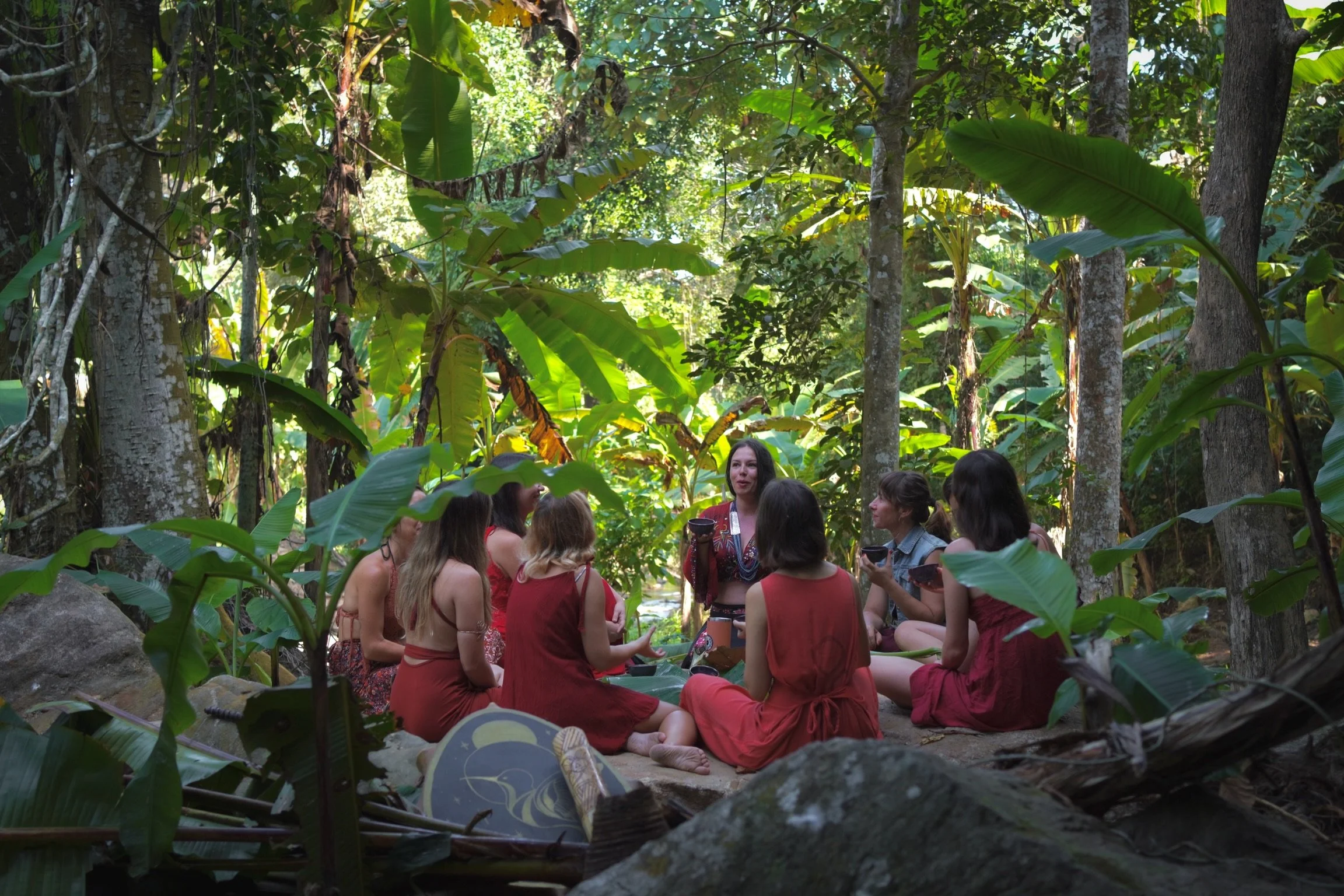
Across cultures and generations, people have created ways to mark beginnings, endings, transitions, loss, celebration and change. Ritual can bring meaning and texture to a circle, while it can also become performative, disconnected from context, or something we reproduce just because it looks like what a women’s circle is supposed to contain.
We explore ritual with curiosity and care, returning to intention, simplicity and relationship. We experiment with ways of marking meaningful moments that feel alive and connected to the women, place and purpose of the circle we are actually holding.
11. Integration & Practice
Eventually, facilitation asks us to take the seat ourselves. Knowing what we might do and being the woman responsible for doing it are different experiences.
Working in small groups, we take turns facilitating, participating and witnessing. We practice welcoming women into a circle, guiding a simple practice and bringing a gathering towards a close. We notice what happens when the attention turns towards us: where we rush, hesitate, reach for certainty, overthink, or lose connection with ourselves.
Through practice, reflection and feedback, we begin recognizing our patterns as facilitators and experimenting with different choices. Our own way of facilitating begins to take shape.
12. Threshold
There comes a point when what we have explored together has to meet the unpredictability of a real circle. The women who arrive will bring their own histories, personalities, needs, relationships and ways of participating. No amount of preparation can tell us exactly what will happen once we are in the room together.
At this threshold, we gather what has taken root over the previous twelve weeks and turn towards the circles we are preparing to hold. We look at what we want to create, who we are creating it for, what feels clear and where uncertainty is still present. We make space for the practical questions alongside what this transition brings up in us: responsibility, self-trust, uncertainty, anticipation, and the reality of becoming the person who will now hold the circle.
This gathering marks the beginning of the independent practice period. You step into your own circles while remaining connected to the training, bringing what happens there back into our Integration Circles over the months ahead.
13. Integration Circle I
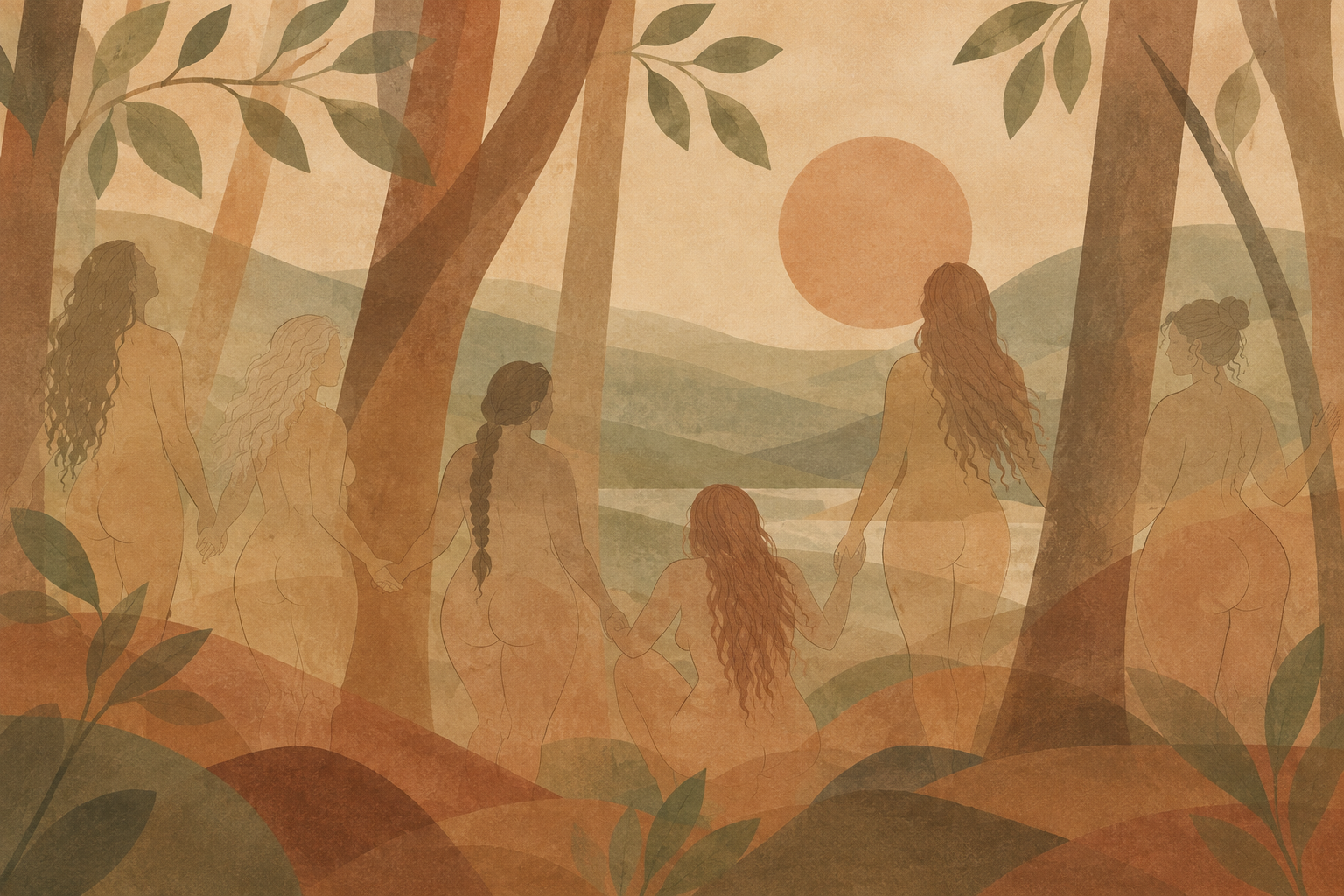
Holding our own circles brings us into relationships we could never fully anticipate. Each group develops its own dynamics, rhythms, tensions and ways of connecting. Our intentions meet the histories, personalities, needs and choices of the women who actually arrive, while our own responses become part of what unfolds.
We return to the training with these experiences alive in us. We look closely at moments that stayed with us: where we felt grounded or uncertain, where something shifted in the group, where we made a choice we are still thinking about, and where something in the relationship or situation touched us personally. Our circles become material for deeper reflection on relationship, responsibility and the facilitator we are becoming.
With continued practice, patterns become easier to see. We may recognize the who we instinctively move towards, the moments that make us pull back, the emotions we find easier to stay with, and the situations that stir urgency, self-doubt, protectiveness or a desire to take control. Our histories, values, sensitivities and ways of relating are present in our facilitation too.
We bring these emerging patterns into relationship with one another, making space for honesty, feedback and deeper self-inquiry. We look at the choices we are making, the impact they may have, and what our bodies are telling us when facilitation becomes difficult. This is part of developing the discernment to hold complexity while remaining connected to ourselves, the women in front of us and the responsibility we have taken on.
14. Integration Circle II
15. Integration III & Closing Circle
Six months of this work changes what we are able to see. We have spent time looking closely at how we facilitate, how we respond under pressure, what happens in our bodies, where we feel steady, where we lose ourselves, and what becomes possible when we stay present with other women through complexity, emotion and difference.
By this point, we have also stepped beyond the training space and taken responsibility for circles of our own. We have made real choices, worked with real group dynamics, encountered moments we could not prepare for, and returned to examine what happened with honesty and care. Our final gathering gives us time to recognize the depth of our work and what each woman has built through her own participation, practice and willingness to keep showing up.
We close the circle we have created together: acknowledging the relationships that have formed, the work that has been done, what has changed, what is still being worked through, and the facilitator each woman is continuing to become. We celebrate the end of our six months together and make space for the reality of ending something that has asked a great deal from us.
How This Training Works
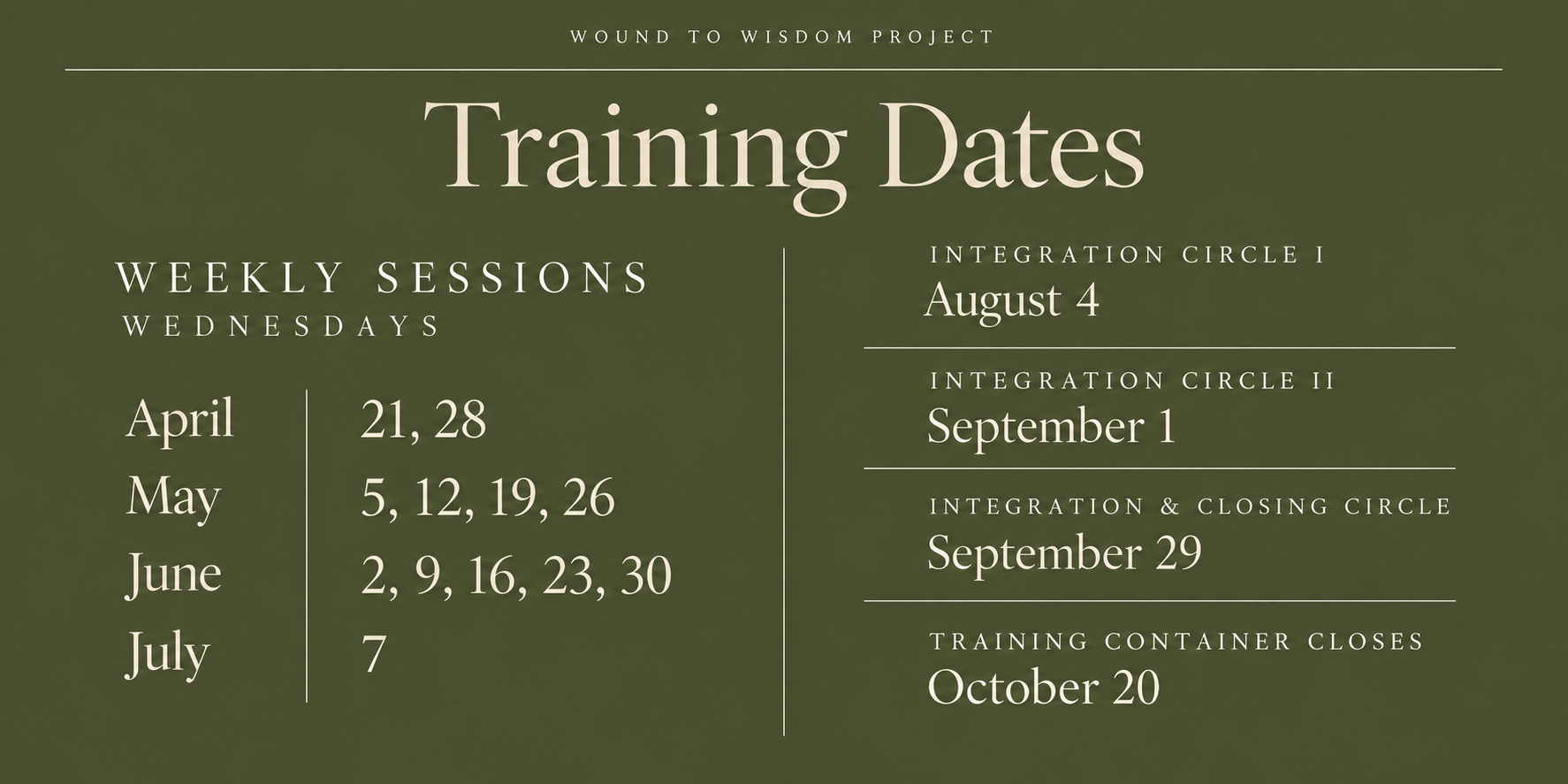
The Core Training unfolds over six months, from April 21 to October 20, 2027.
We begin with twelve weekly live sessions, followed by three months of independent facilitation supported by two Integration Circles and our final Integration & Closing Circle.
After our final live gathering, the training space remains open for another three weeks, with continued access to recordings, materials, our community space and my support until October 20.
Live, Online & Relational
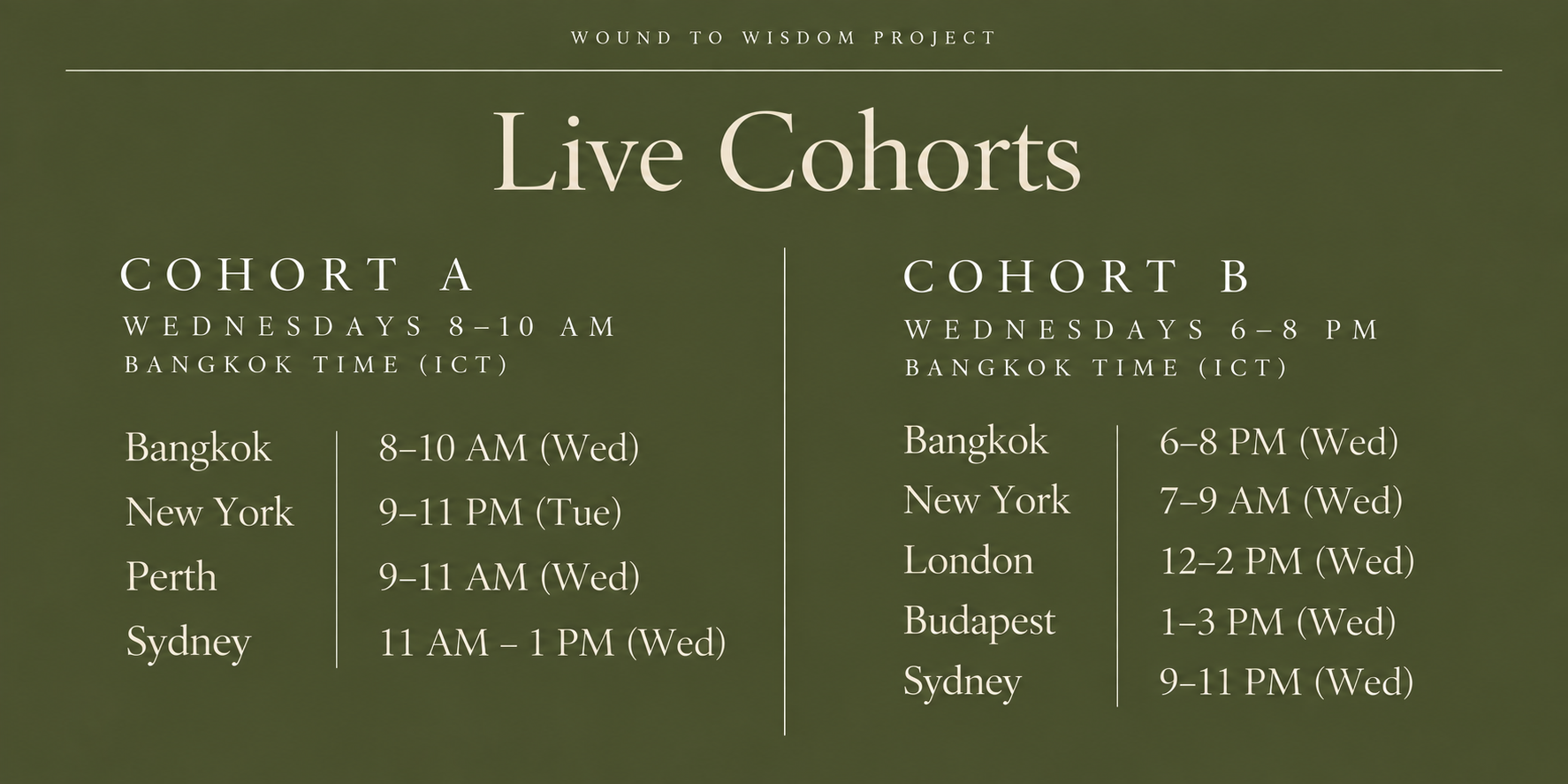
All sessions take place live on Zoom.
This is a participatory training. Teaching is woven together with embodied practice, conversation, experiential exercises, breakout groups, reflection and opportunities to practice facilitation throughout the program.
Between sessions, there will also be simple practices and explorations connected to what we are learning: noticing boundaries in everyday relationships, working with nervous-system practices, observing group dynamics, experimenting with voice and presence, and bringing the material into your own life.
Recordings will be available throughout the six-month training period so you can revisit the material and, where agreed, make up a missed session.
Community & Support
The training continues between our live gatherings.
You will have access to our private community space throughout the six months to stay connected, ask questions, share experiences and receive support as your facilitation develops.
Recordings, training materials and my active participation in the community will remain available until Wednesday, October 20, 2027, three weeks after our Closing Circle.
Attendance & Making Up Sessions
Your presence matters in a relational training, so live attendance is expected throughout the program.
If you cannot attend your home cohort on a particular week, you can attend the other live cohort where possible.
If neither is possible, up to two live sessions may be made up by watching the full recording and completing a short written or audio reflection on the teaching, practices and your experience of the material.
Missing more than two live sessions means the attendance requirement for certification has not been completed.
Certification
Certification is awarded upon completion of the Core Training requirements, including live participation and any agreed make-up work, a minimum of 10 hours of independent facilitation across at least five circles, facilitator reflections, and participation in the integration process.
Our final live gathering on September 29 gives us space to recognise and celebrate the journey we have made together. If you still have an outstanding requirement at that point, you will have until October 20 to complete it.
Your certificate will be issued once all requirements have been completed.
The Deepening Path
For women who want to continue beyond the Core Training, the Deepening Path begins in early 2028 …
and takes the work into more complex relational, embodied and systemic territory.
None of us enters a circle untouched by the systems we have grown up inside. Racism, sexism, misogyny, ableism and other structures of power shape what we have learned about bodies, behavior, intelligence, vulnerability, leadership, sexuality, and sensuality. Understanding these systems intellectually is only part of the work. We also need the courage to notice where they live in us.
This becomes a space for body-based shadow work. We meet some of the biases, judgements, assumptions and reactions we would probably rather not find in ourselves, and notice what happens in the body when they are exposed or challenged. Shame, defensiveness, the need to prove that we are a good person, the urge to explain ourselves or look away can all become part of the exploration. We practice staying present enough to become curious about what is happening, take responsibility where it is ours, and keep learning.
As facilitators, our own unexamined patterns enter the spaces we hold. We explore who we instinctively understand, trust, protect or identify with; whose behavior challenges us; whose needs we recognize easily; what we interpret as difficult, disruptive or unsafe; and how our own social position and lived experience influence the choices we make. We also look directly at facilitator power and what happens when women place trust in us, disagree with us, challenge us or name something we have missed.
This work becomes part of creating spaces that are genuinely more inclusive, compassionate and nourishing. We deepen our understanding of accessibility and neurodivergence, different bodies, communication styles, capacities, histories and nervous systems, while learning how to stay in relationship across difference. These are capacities that reach far beyond circle facilitation, shaping how we meet conflict, power, difference and our own blind spots in the rest of our lives too.
Power, Internalized Systems & the Shadows We Carry
Facilitator Power, Projection & Dependency
Facilitation changes the relationship between us. Women may trust us, admire us, challenge us, become disappointed in us, want more from us, or place us in a position we never consciously asked to occupy. We explore what happens when being needed feels good, when we want to rescue or protect someone, when we become attached to being liked, or when another someone’s’s response touches something unresolved in us.
We look honestly at authority, projection, idealization, dependency and facilitator shadow, developing stronger boundaries and greater awareness of the power we hold. This is also where questions of accountability, rupture and repair become increasingly real: what happens when we get something wrong, cause impact we didn’t intend, or find ourselves inside a relationship that cannot simply be made comfortable again?
Ageism, Changing Bodies & Cyclical Wisdom
We deepen our understanding of the menstrual cycle as lived, embodied knowledge, exploring how cyclical changes can shape energy, capacity, desire, creativity, boundaries and the ways we participate in our lives. We carry this learning into perimenopause, menopause and the transitions that come with ageing, developing greater awareness of the bodies and life stages of the women whose spaces we may one day hold.
We look at ageism and the ways women are taught to relate to ageing. We explore how fear of ageing, invisibility, changing bodies and cultural ideas about women’s value can shape our relationship with ourselves and with one another. Ageism can deepen generational divides between women, separating us from knowledge, experience and wisdom that could otherwise travel between generations. We explore what it means to create spaces where women across ages and life stages can meet one another with greater curiosity and respect, including women whose bodies do not menstruate, who do not have a womb, or whose relationship with these experiences is different from our own.
This foundation can also support women who later feel called to create circles specifically around menstruation, perimenopause, menopause, ageing or other life transitions, with a deeper understanding of the complexity and diversity these experiences hold.
The Deepening Path also unfolds alongside the next Core Training. You will return from a different position: witnessing facilitation from another perspective, supporting women in breakout rooms and smaller spaces, observing group dynamics as they develop, and paying close attention to facilitation choices as they happen.
This gives you another way of seeing what happens beyond the visible structure of a circle - while continuing to bring your observations, questions and experiences back into your own Deepening group.
Learning From Inside the Training
These are only some of the territories we will enter together.
The full Deepening Path curriculum, dates, guest teachers and details will be shared with women who complete the Core Training and are eligible to continue into the next stage of the pathway.
There Is More
Investment & Accessibility
Investment, payment plan and scholarship information will be published before applications open in January 2027.
I want this training to be financially sustainable while making space for women with different economic circumstances. A limited number of partial scholarships will be available.
Applications open January 2027.
Stay Connected
If this training speaks to you, I'd love to stay connected.
Women who join the interest list will receive early access to applications before they open publicly, along with occasional updates, invitations and information about investment, payment plans and scholarship opportunities.
There's no commitment to apply.